

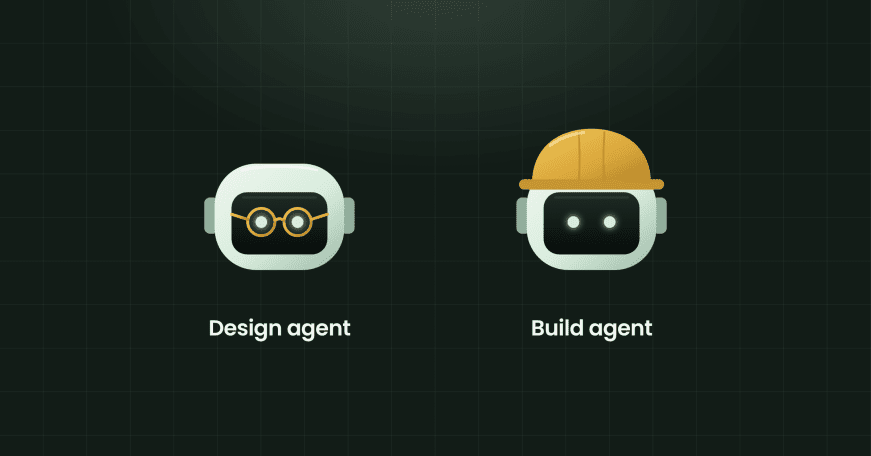
Today, Barndoor is launching two dedicated agents for building precise AI automations: a design agent that turns your request into a Blueprint, and a build agent that executes once you’ve approved it. The division of labor exists to prevent unintended or misunderstood user requests to truly understand requests before they get built.
The limits of traditional automation tools
Legacy automation tools are fine for complex logic but require coding skills, are contained to rigid if/then logic, can’t make judgement calls, are time consuming to build, and are often easily breakable with no way to easily understand why the workflow broke in the first place. Even newer AI automation tools that have moved beyond rigid if/then logic often only drafts or routes, still requiring a human to complete the task.
On top of all of that, none are tied to identity and access governance – these existing tools don’t give you tight control over what the automation (even when it works) can see, spend, or reach. They can’t provide a consistent outcome run to run, nor a reliable log of what happened each time.
Precise, reliable automations without unnecessary human in the loops
Barndoor Automations is built “LLM-first,” not following decades-old workflow engines that move data reliably, but break at a human in the loop step the moment a process needs a judgement call. With Barndoor Automations, that step is handed to a guarded inference instead, so the process is deterministic when needed, all governed from beginning to end. Every Blueprint workflow on Barndoor inherits the same access, data protection, and spend controls you’ve already set up, so there’s no separate policy to configure.
When published, each Blueprint is accessible to the right teams that have the appropriate access.
How the two agents divide automation-creating work
AI generated workflows are nothing new now. But with most tools, what you’re really getting is unsteady scaffolding that only superficially works in demo after someone has spent days fixing mappings, rewiring steps, and patching logic by hand.
Barndoor is addressing these flaws by separating automation creation into two phases, each with its own dedicated agent architects.
First, the design agent’s job is to understand your request. It turns what you asked for in plain English into a “brief” that includes your requirements, each designated as answered, assumed, not applicable, or unknown. It then transforms it into a “sketch” which is a numbered plan where every step names the requirement.
“Every automation tool makes assumptions on your behalf. The difference is whether you see them before it runs or after the run fails. We built the design agent to explicitly confirm whether you really meant what you said,” said Jay Parisi, GM of Barndoor Automation.
Then, the build agent’s job is to execute. Once you’ve signed off on the design agent’s “sketch,” the build agent takes the approved plan, writes the automation in FML, and checks its output against that approved plan. This is done mostly without an LLM to minimize unpredictability or drift.
“Think of how homes are built. An architect sketches the building before someone pours concrete and construction begins. This is what the design agent is here for – to check assumptions, confirm intent, and help you review everything. Once approved, the work is then handed to the build agent to start the work,” said Parisi.
The two-phase design restricts which tools are available to the agent at each phase. For example, the design agent’s available tools are list_available_tools, update_brief, and submit_brief. The design agent has access to draft and save a Blueprint, but it doesn’t start that work unprompted. It first analyzes what’s available in your connected systems, makes recommendations, and asks for your feedback. Only once you approve the draft does it become the Blueprint the build agent runs.
A content marketing Blueprint use case

Watch the video below to see how we built this Blueprint
Ready to build your first automation with agent architects?
Enterprises can start building governed, production-ready AI automations today. Visit automations.barndoor.ai to sign up and put your first automation to work – start with a Free trial.
About Barndoor Automations and Frags
Barndoor Automations is built on Frags, an LLM workflow engine that executes workflows written in FML, the Frags Modeling Language. Frags treats complex workflows, like data retrieval and business processes as controlled actions that the AI cannot alter without authorization. It ensures that the LLM is only working where it’s needed, saving money and lowering risk. Frags and FML will remain open source and supported by the Barndoor team to empower everyone with the tools they need to build trusted, reliable AI workflows.


