The risks of ungoverned AI are well-documented — from unpredictable behavior to security breaches — and the rise of AI agents is exacerbating people’s concerns. As Jeff Shiner, the CEO of 1Password, explained to Axios, “[Agents] work 24/7, without sleeping and at very quick speeds.” Consider an AI agent that updates Salesforce records, a tedious task salespeople are eager to offload. What if the agent updates the wrong record, or worse, thousands of records? What if the agent exposes sensitive data to a user who isn’t supposed to see it, or even shares it outside the organization?
Organizations need to be able to deploy AI with confidence, or they won’t use it at all. Worse, they might invest in AI but fail to give agents the access they need to create real value, leading to wasted spend and missed opportunities to improve efficiency, drive innovation, or grow revenue. Just as your human employees need access to data and applications to do their jobs, so will your AI agents.
And just as you actively manage your human workforce, you’ll need to actively manage your AI workforce, too. Just as enterprises have established identity governance frameworks for employees — defining access controls, permissions, and security protocols based on roles and responsibilities — the same rigorous approach must be applied to AI agents, but with even more granular controls. It takes more than just connecting agents to your auth provider or logging tools. Properly governing the agentic enterprise starts with controlling what data and tools agents can use and what actions they can take, then extends to monitoring and managing their performance, then granting them more responsibility as they prove they can handle it.
In this post, we’ll explore why governance is key to agentic AI success and how you can implement a governance framework that positions your organization for sustainable AI growth.
Governance as a Growth Enabler
Good AI governance is like having great HR, IT, and security teams. As Nvidia CEO Jensen Huang put it recently, “These agentic AIs are essentially robots — your digital workforce. In the future, we’ll be the generation of CEOs managing both a biological workforce and a digital workforce. HR will manage the biological workforce, and IT will become HR for agentic AI.”
Governance means you always know who your company employs, what skills each employee has, and what they’re working on. You can control and monitor what data, tools, and systems they can use. And you can keep tabs on their performance and use wins as a way to motivate and inspire the rest of the workforce.
The challenge is scaling governance to keep up with the rapid proliferation of agents. Just like you have hundreds (or thousands) of employees with diverse skills and experience, you’re going to have countless AI agents with narrow specializations. For each agent, you need to be able to:
- Understand and control, at a granular level, what an agent is allowed to do (and what the human the agent is acting on behalf of is allowed to do)
- Monitor agent performance to identify potential performance issues — and success stories that can be used to drive new use cases
Managing dozens or hundreds of agents at this level will quickly outpace the best-equipped IT team. Traditional governance tools — your IAM, IdP, and logging platforms — will play a key role, but they’re not built to handle the nuances or scale challenges of governing agentic AI.
Best Practices for Growth-Oriented AI Governance
Ineffective AI governance can take different forms. Some organizations assume their existing approach to identity governance will work just fine for agentic AI — but IdP and IAM tools don’t let you set granular permissions for agents that are narrower than what the user running it is allowed to do, creating the risk of a serious mistake that leads to pulling the plug on AI altogether.
Others try to manage AI at the application or agent platform level, quickly overwhelming IT teams that simply don’t have the bandwidth to perform so many manual tasks. Some platforms offer capabilities for controlling access for AI agents, but the technical barrier to entry is so high that business admins — the people who have the most context on how agents should be used, just like managers have the most context on their direct reports — can’t use them.
Fortunately, new technology is available to ensure organizations have the identity governance capabilities they need to ensure they can deploy agentic AI with confidence — and at scale. Look for a platform that lets you:
- Granularly control what agents can do based on both the agent and the role of the human using that agent. For example, an SDR shouldn’t be able to operate a Salesforce agent in the same way the VP of Sales can (or access the same data). Similarly, you might want to restrict a brand-new hire’s permissions more tightly than someone who’s been on the team for five years.
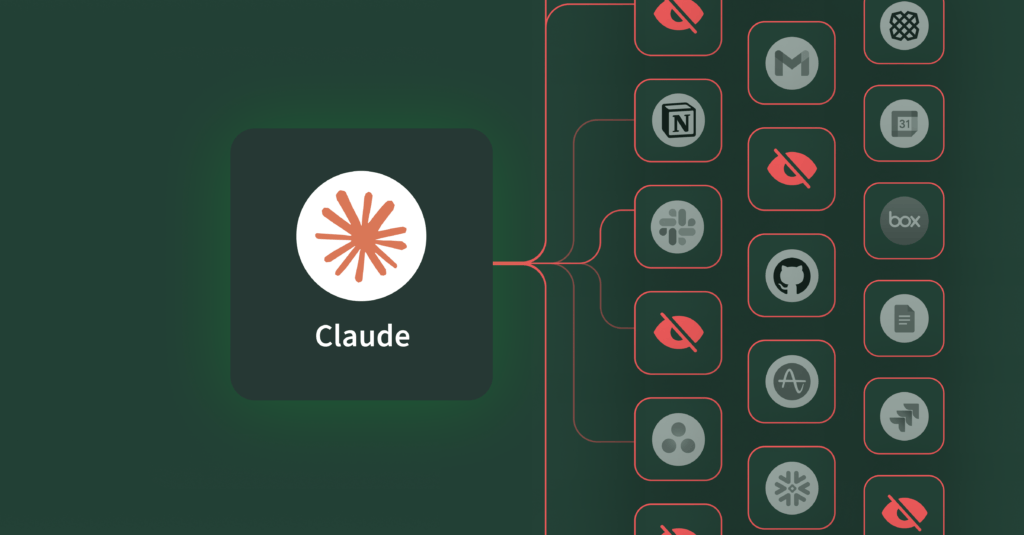
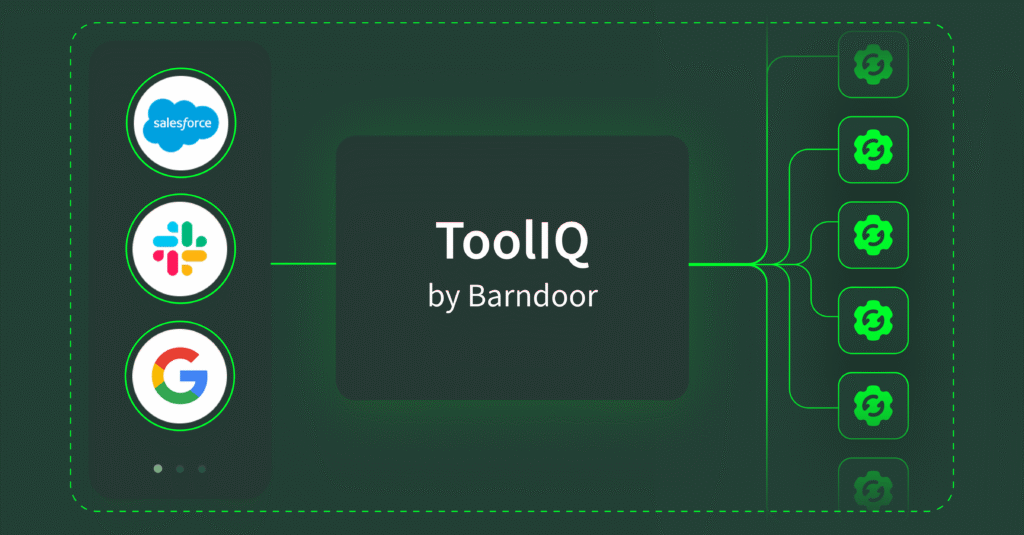
- Securely connect agents to your services (Gmail, Jira, Notion, etc.) through secure MCP servers, using your IAM and SSO providers for authentication.
- Monitor agent performance to detect anomalies, monitor risk, and identify which agents are delivering value. You should be able to easily ask and answer questions like “Which users are using which agents the most?” and “What services are agents using most frequently?” to identify commonalities around the actions agents are taking — or not taking, which may indicate you need to take action to optimize agents’ performance.
- Test agent capabilities and progressively grant new permissions based on the outcomes of those tests. Just like onboarding a person, you wouldn’t give them the keys to the castle on day one. You should be able to test how an agent executes commands or workflow actions against a small number of records to ensure it behaves the way you thought it would, or try out ten different actions to confirm the outputs meet your expectations. If not, it should be easy to rework permissions and controls and retest.
Importantly, you need a platform that empowers business admins — the people who manage your Salesforce, Slack, Zendesk, or Stripe instance (to name just a few examples) — to participate in governance. Centralized governance solutions provide essential visibility and control across the enterprise while empowering teams to safely adopt AI at scale. Unlike siloed approaches that limit AI to technical teams or create inconsistent policies across departments, a unified governance layer ensures both security and business agility.
We Can’t Grow AI Adoption Without Governance
Building a truly agentic enterprise starts with applying the same principles of identity governance that you apply to your human workforce — but with tools specifically designed for the unique challenges of agentic AI. By implementing the right governance platform now, you’ll be positioning your organization to fully realize the potential of AI agents to help you operate more efficiently and create value.
Barndoor is the control plane for the agentic enterprise, helping you implement governance that minimizes risk and maximizes growth. Learn more about the platform or join the waitlist now.