


Table Of Contents
Description
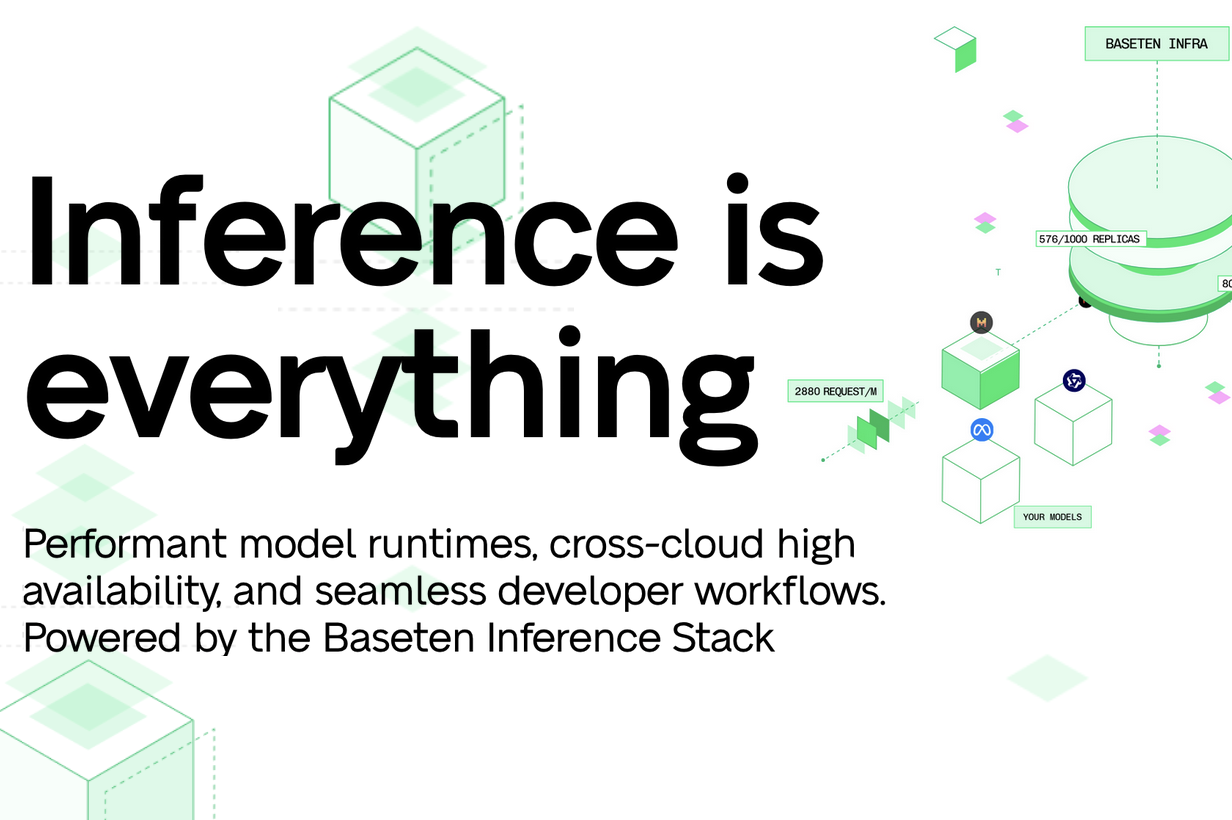
Baseten provides infrastructure for deploying AI models in production applications with automated scaling and performance optimization. The platform operates through simplified model packaging, API integrations, and flexible deployment options across cloud and on-premises environments with enterprise security controls. Engineering teams and organizations use Baseten to launch AI-powered products faster by eliminating the complexity of managing underlying infrastructure and scaling requirements.
Customers
What Problem Does Baseten Solve?
Companies often face delays when moving AI models from development to production due to the time and expertise required to configure and manage infrastructure. This slows product launches, increases engineering overhead, and distracts teams from core development priorities. Baseten solves this by providing production-ready infrastructure with built-in deployment and scaling capabilities, enabling organizations to ship AI-powered applications significantly faster.
Pros
- Model Deployment Agility:
Baseten enables rapid deployment of machine learning models with minimal engineering via integrated hosting, version control, and collaboration features. - Seamless Developer Experience:
Offers SDKs, APIs, and a visual interface that streamline iteration and feedback loops, allowing data scientists and engineers to iterate together. - Scalable & Cost‑Efficient Infrastructure:
Utilizes serverless compute with usage-based pricing and autoscaling to support enterprise workloads while optimizing cost and resource utilization.
Cons
- Third‑Party Framework Reliance:
Dependence on external model frameworks and cloud providers may expose deployments to upstream changes and compatibility issues. - Limited Native Feature Set:
Initial platform scope may lack built‑in features like advanced monitoring, explainability, or automated retraining, requiring custom implementation. - Scaling Operational Overhead:
As usage grows, teams must manage integration complexity, security configuration, and governance themselves, potentially increasing operational burden.
Investors
Last updated: June 8, 2026
All research and content is powered by people, with help from AI.