


Table Of Contents
Description
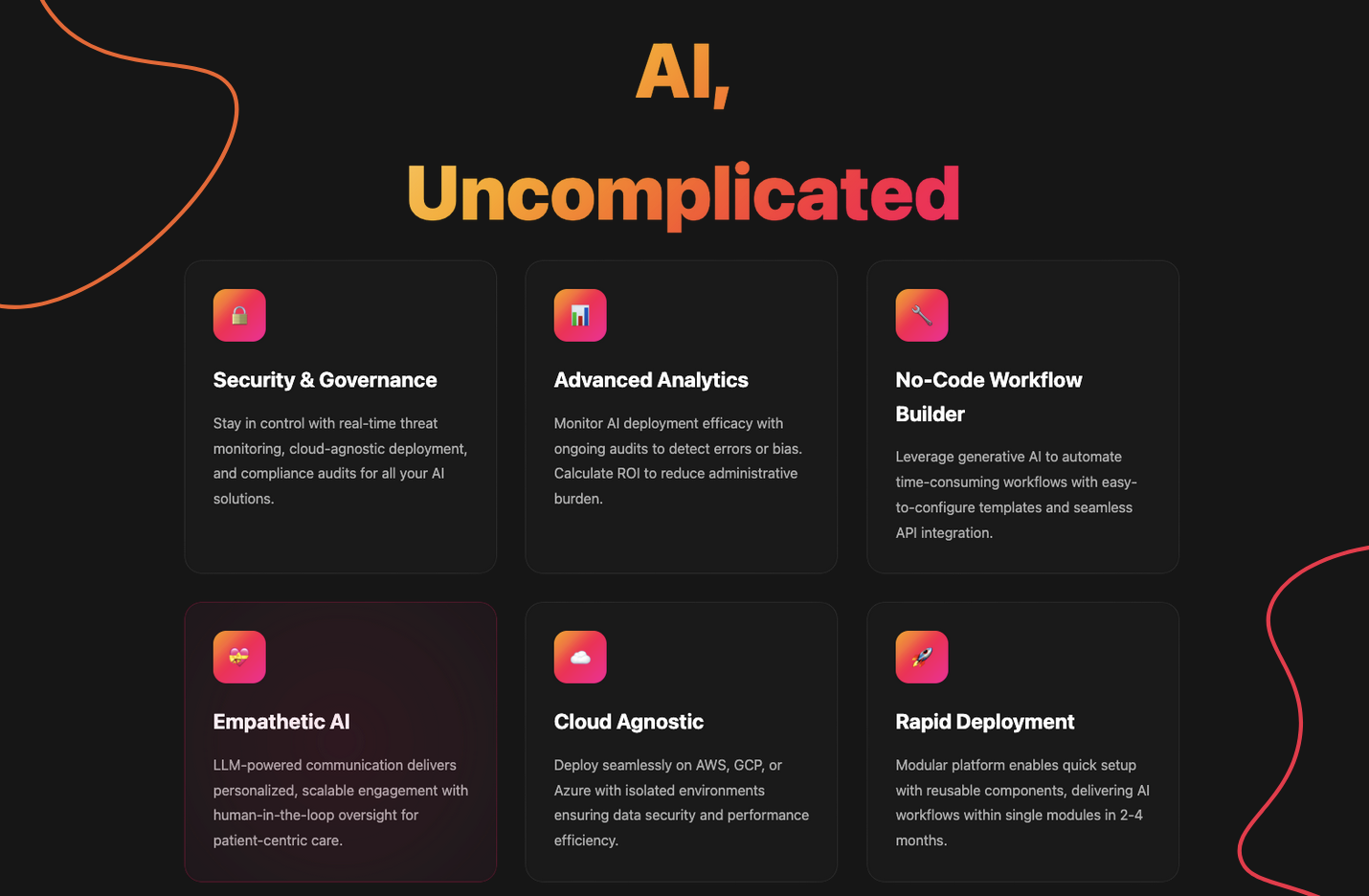
Trase lets healthcare teams build AI agents without writing code. Its workflow builder uses templates to connect large language models (LLMs) to systems like healthcare system APIs, CRMs, and clinical databases for tasks such as claims handling, patient outreach, and care plan automation. These agents run in containers on AWS, GCP, or Azure, with secure data pipelines that route patient info through compliant AI models—keeping full audit trails and human review steps. Operations teams design agent behavior using a drag-and-drop interface, setting triggers, data flows, and outputs. Admins track performance with dashboards showing processing volumes, error rates, and ROI across workflows.
What Problem Does Trase Solve?
Healthcare organizations lose valuable time to manual, repetitive tasks like claims processing, patient outreach, and care plan creation—slowing operations and overloading staff. This leads to delayed patient care, higher administrative costs, and staff burnout from routine work. Trase's AI agent platform automates these healthcare workflows while maintaining compliance and human oversight, freeing up staff to focus on direct patient care.
Pros
- Enterprise Tracing Platform:
Trase helps teams monitor complex systems—like microservices and AI workloads—with tools built to trace issues across the entire stack. - Detailed Data Tracking at Scale:
Trase captures detailed event data at scale—tracking every step with low overhead, so teams can pinpoint issues quickly and confidently. - Unified Telemetry:
Brings tracing, metrics, and logs together in one place, making it easier for teams to find root causes and solve operational problems fast.
Cons
- Instrumentation Overhead:
Adding tracing to diverse and complex systems takes time, teams need consistent setup and tagging practices to ensure usable, end-to-end visibility. - Storage and Retention Costs:
Detailed tracing data adds up quickly, often requiring scalable storage systems and smart retention policies to avoid rising costs. - Alert Noise Risk:
Too much trace data can flood teams with alerts—making it critical to fine-tune thresholds and sampling for meaningful signal over noise.
Last updated: September 14, 2025
All research and content is powered by people, with help from AI.