


Table Of Contents
Description
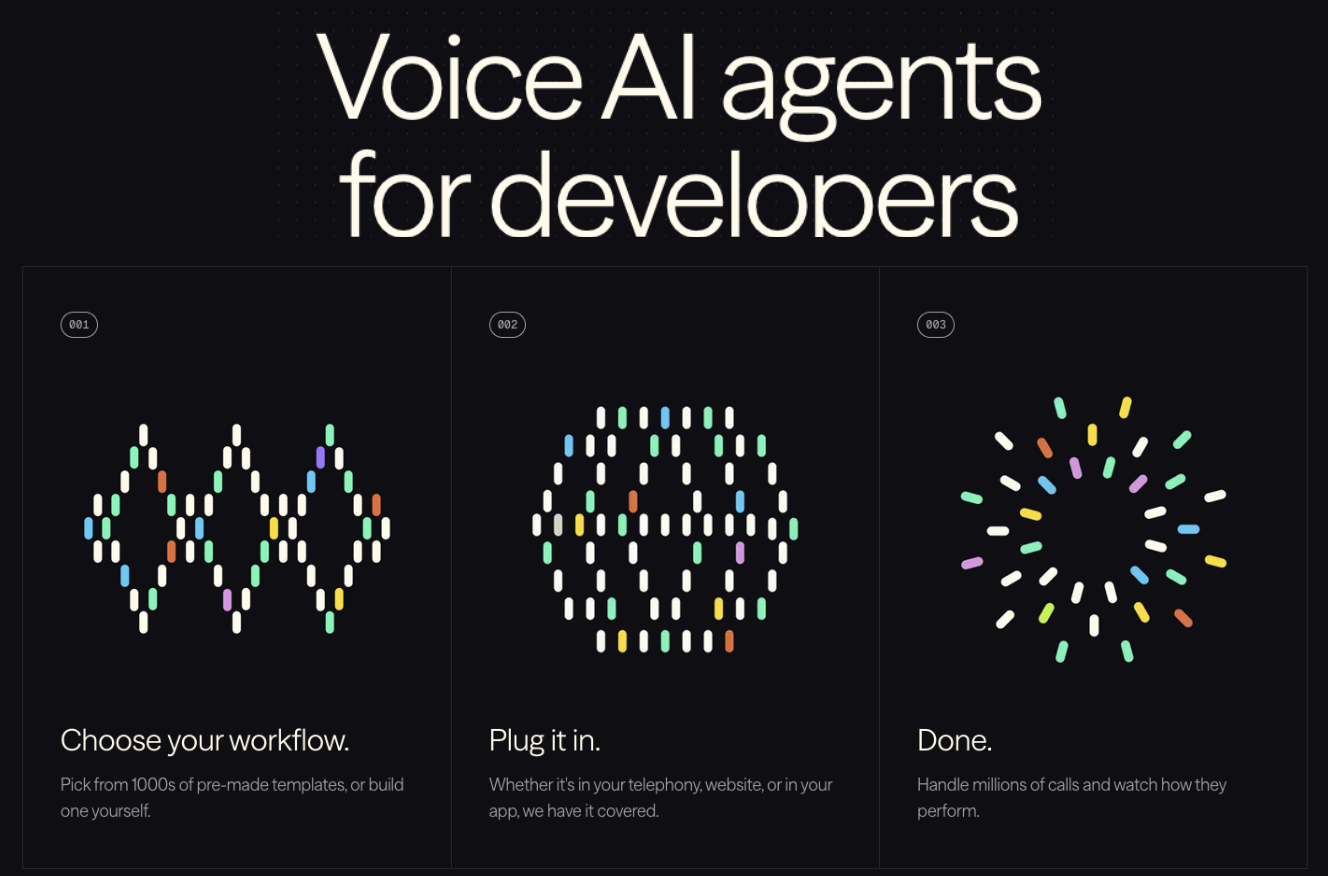
Vapi lets developers build real-time voice experiences powered by AI. It handles two-way audio using WebRTC, transcribes speech, runs it through a language model, and responds with natural-sounding voice—all in under 500ms. It supports over 100 languages and voice styles. Developers can fine-tune behavior with over 4,000 settings via REST APIs and WebSockets, triggering external API calls, database lookups, or automations during live conversations. Voice agents can be added to phone systems, websites, or mobile apps using JavaScript, Python, or Node.js. Built-in A/B testing tools help teams improve prompts, voices, and conversation flow across high call volumes.
Customers
What Problem Does Vapi Solve?
Customer service and sales teams struggle to handle high call volumes with human agents, leading to long wait times, missed opportunities, and skyrocketing labor costs. This creates poor customer experiences and limits business growth since companies can't scale their phone operations efficiently. Vapi solves this by providing an API that lets businesses build AI voice agents that can handle customer calls automatically, performing tasks like answering questions and taking actions in real-time without human intervention.
Pros
- Real-Time Voice Experience:
Delivers ultra-low latency (sub‑600 ms) voice calls with natural turn-taking and interruption handling. - Model & Voice Flexibility:
Supports any transcription, LLM, or speech provider—plus bring-your-own model options for full customization. - Visual Flow Builder & Tool Calling:
Build multi-step voice workflows visually, connecting to APIs and systems without code via blocks.
Cons
- Hosted Environment Dependency:
Vapi runs in its own environment, limiting deployment in private, hybrid, or air-gapped infrastructure setups. - No Outbound Templates:
Setup is optimized for inbound bots—creating customized outbound workflows requires manual configuration and more dev work. - Variable Voice Consistency:
Voice quality and response speed vary widely depending on TTS provider, region, and model, impacting customer experience.
Last updated: July 29, 2025
All research and content is powered by people, with help from AI.