


Table Of Contents
Description
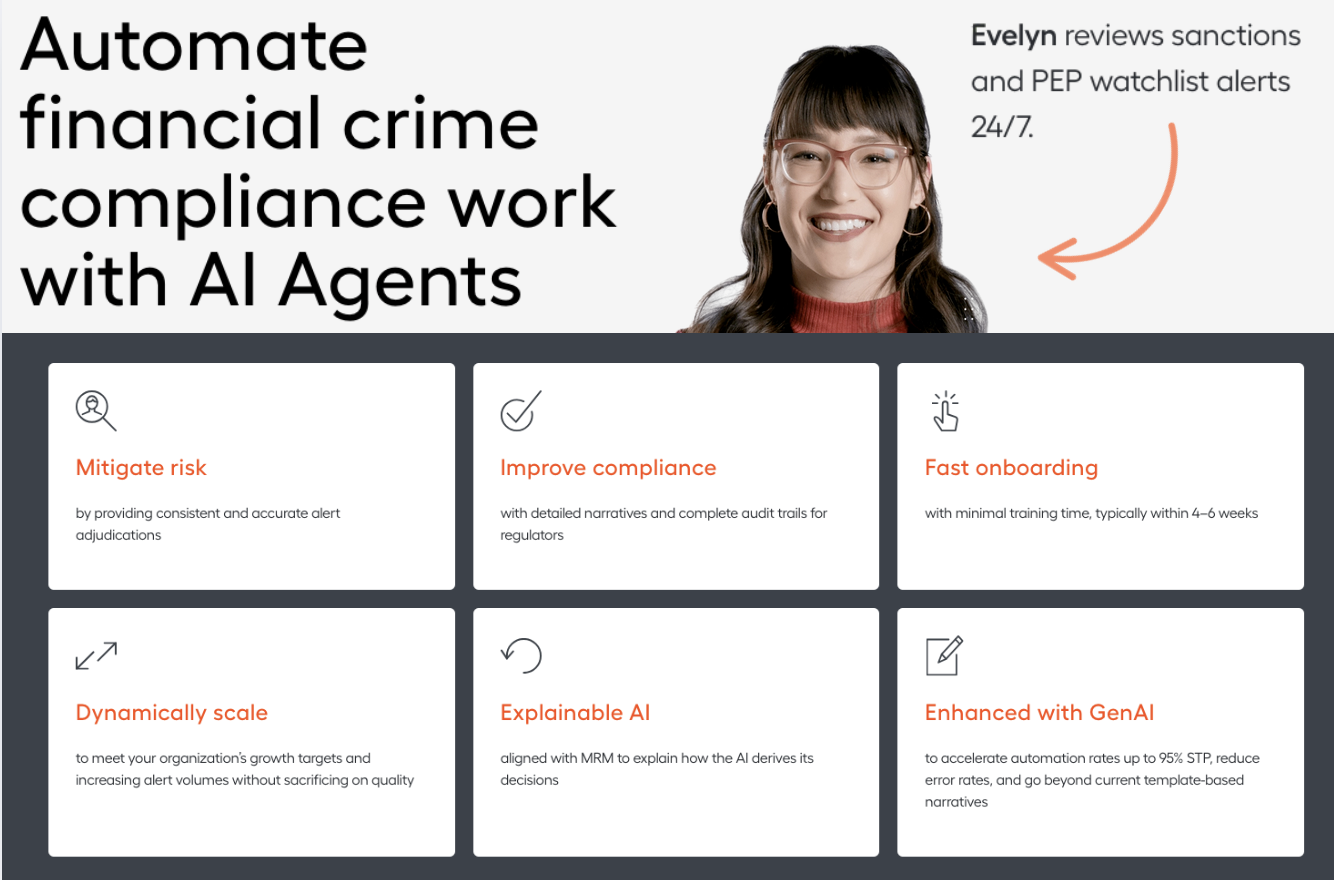
WorkFusion’s AI agents help banks automate financial crime compliance by reviewing sanctions alerts, flagged transactions, and KYC documents. Each virtual analyst is specialized—Evelyn handles sanctions, Isaac monitors transactions, and Darrell focuses on due diligence. These agents connect to existing compliance systems via APIs and use machine learning to spot patterns, match entities, review media, and escalate based on risk levels. The platform processes millions of transactions each month and supports audit trails, case reviews, and regulatory reporting through built-in integrations with core banking and case management tools.
Customers
What Problem Does WorkFusion Solve?
Banks get overwhelmed by thousands of false-positive alerts from anti-money laundering systems that compliance teams must manually review. This creates dangerous backlogs, regulatory risk, and forces banks to hire expensive compliance staff just to keep up. WorkFusion's AI agents automatically investigate and clear routine AML alerts, letting human analysts focus on genuine suspicious activity.
Pros
- Smart Process Automation:
WorkFusion combines RPA, AI, and machine learning to automate complex, repetitive business processes at scale. - Self-Learning Capabilities:
Uses AI to improve over time through intelligent document parsing and adaptive decision models. - Enterprise Integration Support:
Offers prebuilt connectors and orchestration for ERP, CRM, and document management systems.
Cons
- Implementation Complexity:
Developing end-to-end automation pipelines often requires both RPA and data science expertise. - Maintenance Overhead:
AI-driven bots must be monitored, retrained, and tested regularly. - Cloud Dependency Risk:
SaaS-oriented deployments may limit on-premise flexibility or create vendor lock-in for hybrid environments.
Last updated: July 25, 2025
All research and content is powered by people, with help from AI.